Security awareness metrics often measure activity rather than outcomes. We explore how Secure Behaviour Management combines competencies, behavioural insights and phishing intelligence to provide a clearer view of workforce readiness and phishing defence effectiveness.
All our webinars, all in one place
Dive into our extensive back catalogue, featuring over 900 webinars since the series started in 2020.
Discover a fascinating array of topics across the cybersecurity landscape. Whether you’re exploring the latest innovations, seeking expert insights or sharpening your skills, our library is your go-to resource - accessible anytime, anywhere.
Start learning and unlock the knowledge that matters to you!
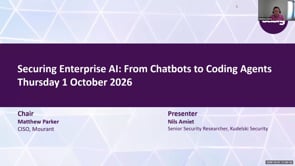
As AI assistants and coding agents become embedded in daily work, organisations face new security and governance risks. We explore practical controls, policies and architectures that help secure enterprise AI adoption while enabling innovation.
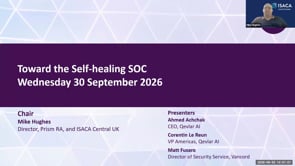
Most SOCs get faster, not smarter, knowledge from each investigation rarely survives the shift change. What if it compounded instead? This session explores the self-healing SOC: one that watches for threats around the clock and gets stronger with every investigation, closing the loop on its own.
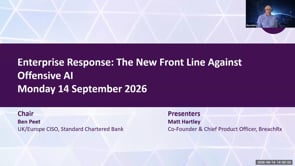
As offensive AI accelerates cyber incidents, response can no longer remain manual. This session introduces Cyber Incident Response Management (CIRM) and explores how AI-enabled response helps teams coordinate decisions, reduce regulatory burden, strengthen readiness, and improve resilience.
M365 environments are more complex, but security gaps persist and are now delaying AI adoption. As Copilot surfaces hidden risks in SharePoint and beyond, issues like oversharing and weak governance are becoming strategic blockers to innovation.
As AI use expands across web, desktop and local models, security teams are losing visibility into real risk. This session shows how real‑time AI insight, behavioural context and smart nudges help teams prevent data exposure. Join us to learn how to secure AI without slowing innovation.
As threats outpace traditional defences, effective security in 2026 depends on faster, smarter decisions. We’ll show how user reported threats create continuous feedback loops, turning everyday attacks into actionable intelligence and making people an active, adaptive defence layer.
We discover what works, what fails and consider the risks of autonomy. We also examine dangerous anti‑patterns and explore how to secure AI agents before control is lost.
Not a member yet?
SASIG membership gives you access to all of our resources, and application only takes a few minutes.
Find out more & apply